














Magnatune albums David Bowles has produced:
- Philharmonia Baroque: Mozart Orchestral Works, Rameau and Leclair, Scarlatti - Cecilian Vespers, Atalanta, and Beethoven Symphonies No 3 Eroica and No 8
- Musica Franca: Boismortier - Sonatas for Two Bassoons and Continuo, and Corrette - Le Phenix - Les Delices de la Solitude
- Seth Carlin: Schubert - Music for fortepiano four hands, Schubert - Works for Solo Fortepiano, and Mozart In The Age of Enlightenment
- Hanneke van Proosdij: Harpsichord suites of Chambonnieres
Magnatune and David Bowles have teamed up to present The David Bowles Signature Series: a series of albums produced with a singular goal and philosophy.
The Series' goal is to give a well regarded producer the creative freedom to pursue his music ideas, and to present a body of works to an International audience.
We hope you enjoy these works and that they help give you insight to the intimate artist/producer relationship that helps define truly great recordings.

The process of sound recording is a creative one, which allows me to expand my listening perspective beyond
'front row centre' or 'the conductor's podium'. There are many challenges I face as a producer and an engineer:
different acoustics, different repertoire, changes in ambience, and, in the case of historically-informed performances,
different instruments played by the same performer. The overriding challenge, however, is to create a convincing
performance which will engage the listener's emotions as well as intellect."
In the spring of 1998, I was using an 8-track Genex digital recorder and editing on a 16-track SADiE 24.96 system. Today I use the SADiE LRX2 recording system, which can record up to 32 tracks of high-resolution audio and runs on a laptop. My studio at home has a SADiE H64 system with Cedar Retouch for removing some of the annoying coughs and other noises always present in live recordings. One reason to record live to multi-track systems is that there is almost never an isolated space to use as a 'control room': even with closed-ear headphones one hears 'real' sound along with the recorded signal. Nevertheless, with the SADiE LRX2 I can mix to stereo and give the client a CD to listen to at the end of the performance.
Philharmonia Baroque Orchestra performs in different locations around the San Francisco Bay Area, and does each
programme twice in the same church in Berkeley. I wanted to record those two performances of each concert set, so
I could edit between them for broadcasts or the annual 'Season Highlights CD'. This meant taking careful measurements
and replicating the setup at the next performance. This also meant that I could evaluate my work afterwards, duplicating
setups I liked and tweaking the ones I wasn't satisfied with.
When funding became available, I started to transfer the older CD-R and DAT tapes to the SADiE system, editing out
excess pauses, tuning and most applause. For the most part, previous seasons had been recorded in different locations.
However, I noted when two Berkeley performances were recorded, so these could be considered for possible release on
Magnatune.
For the first few Magnatune releases, music director Nicholas McGegan chose representative repertoire from Baroque,
Classical and early Romantic periods. These were edited from live Philharmonia Baroque Orchestra performances from
the past four seasons. The orchestra performs repertoire from the early 17th Century to Berlioz and Schumann."
He received Bachelor of Music and Master of Music degrees in violoncello
from The Juilliard School and a certificate in early music performance
practice from the Royal Conservatory in The Hague, Netherlands. For many
years he performed and recorded as cellist with both orchestras and chamber
ensembles; his recordings with the Arcadian Academy won two French
"Diapason d'Or" awards and with Philharmonia Baroque Orchestra won a UK
Gramophone Magazine award. In addition he organised and contracted
orchestral ensembles for recordings with Chanticleer (Mexican Baroque I and
II) and the Arcadian Academy (Bach - cantatas with William Parker).
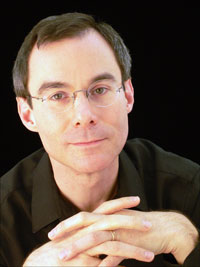 "My recording philosophy is to present an accurate audio image of the performers, from the perspective of well-placed
microphones. Once I understand the acoustic and how sounds propagate in it, than I can choose specific microphones
to create the 'sound image'. I believe that, as each microphone model has unique characteristics, they should be
thought of as an artist's paintbrushes: some work better for large ensembles and others for close-up solo work. The
same goes for microphone preamplifiers: some pass through fine detail, and others sound 'warm'. Therefore I do not
restrict myself to one or two favourite pairs of microphones and/or preamplifiers.
"My recording philosophy is to present an accurate audio image of the performers, from the perspective of well-placed
microphones. Once I understand the acoustic and how sounds propagate in it, than I can choose specific microphones
to create the 'sound image'. I believe that, as each microphone model has unique characteristics, they should be
thought of as an artist's paintbrushes: some work better for large ensembles and others for close-up solo work. The
same goes for microphone preamplifiers: some pass through fine detail, and others sound 'warm'. Therefore I do not
restrict myself to one or two favourite pairs of microphones and/or preamplifiers.
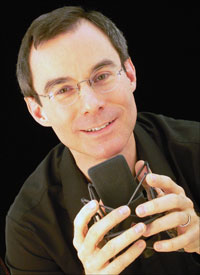 "I started producing Philharmonia Baroque Orchestra's commercial recordings in 1996. In the 2001-2002 season, I took
over the archival concert recordings as well. At that point all of us were aware of a growing archive of recordings:
reel-to-reel tapes, video cassettes (unidentified as to what format they were recorded in), DAT tapes and finally
unedited CD-Rs. All of these had been recorded directly to two-track stereo; needless to say there would be no chance
of re-balancing or correcting the amount of reverb added to dry acoustics.
"I started producing Philharmonia Baroque Orchestra's commercial recordings in 1996. In the 2001-2002 season, I took
over the archival concert recordings as well. At that point all of us were aware of a growing archive of recordings:
reel-to-reel tapes, video cassettes (unidentified as to what format they were recorded in), DAT tapes and finally
unedited CD-Rs. All of these had been recorded directly to two-track stereo; needless to say there would be no chance
of re-balancing or correcting the amount of reverb added to dry acoustics.
 Recording producer and engineer David v.R. Bowles formed Swineshead
Productions as a classical recording production company. Since its
inception he has produced and edited CDs of repertoire ranging from the
17th century to the music of today; he has also engineered several of those
CD projects as well.
Clients include BMG Classics, Teldec, BIS, Nonesuch and Avie Records. Mr. Bowles has produced recordings with
Philharmonia Baroque Orchestra, Houston Symphony and Chanticleer.
Mr. Bowles is a member of AES (Audio Engineering
Society), and is on the committee of the San Francisco section as well. He
is a voting member of NARAS (National Academy of Recording Arts and
Sciences) and active in their Producers & Engineers Wing as well. He has
been nominated thrice for Classical Producer of the Year in the American
Grammy awards, and has served on the audio engineering staff of the Aspen
Music Festival.
Recording producer and engineer David v.R. Bowles formed Swineshead
Productions as a classical recording production company. Since its
inception he has produced and edited CDs of repertoire ranging from the
17th century to the music of today; he has also engineered several of those
CD projects as well.
Clients include BMG Classics, Teldec, BIS, Nonesuch and Avie Records. Mr. Bowles has produced recordings with
Philharmonia Baroque Orchestra, Houston Symphony and Chanticleer.
Mr. Bowles is a member of AES (Audio Engineering
Society), and is on the committee of the San Francisco section as well. He
is a voting member of NARAS (National Academy of Recording Arts and
Sciences) and active in their Producers & Engineers Wing as well. He has
been nominated thrice for Classical Producer of the Year in the American
Grammy awards, and has served on the audio engineering staff of the Aspen
Music Festival.

