|
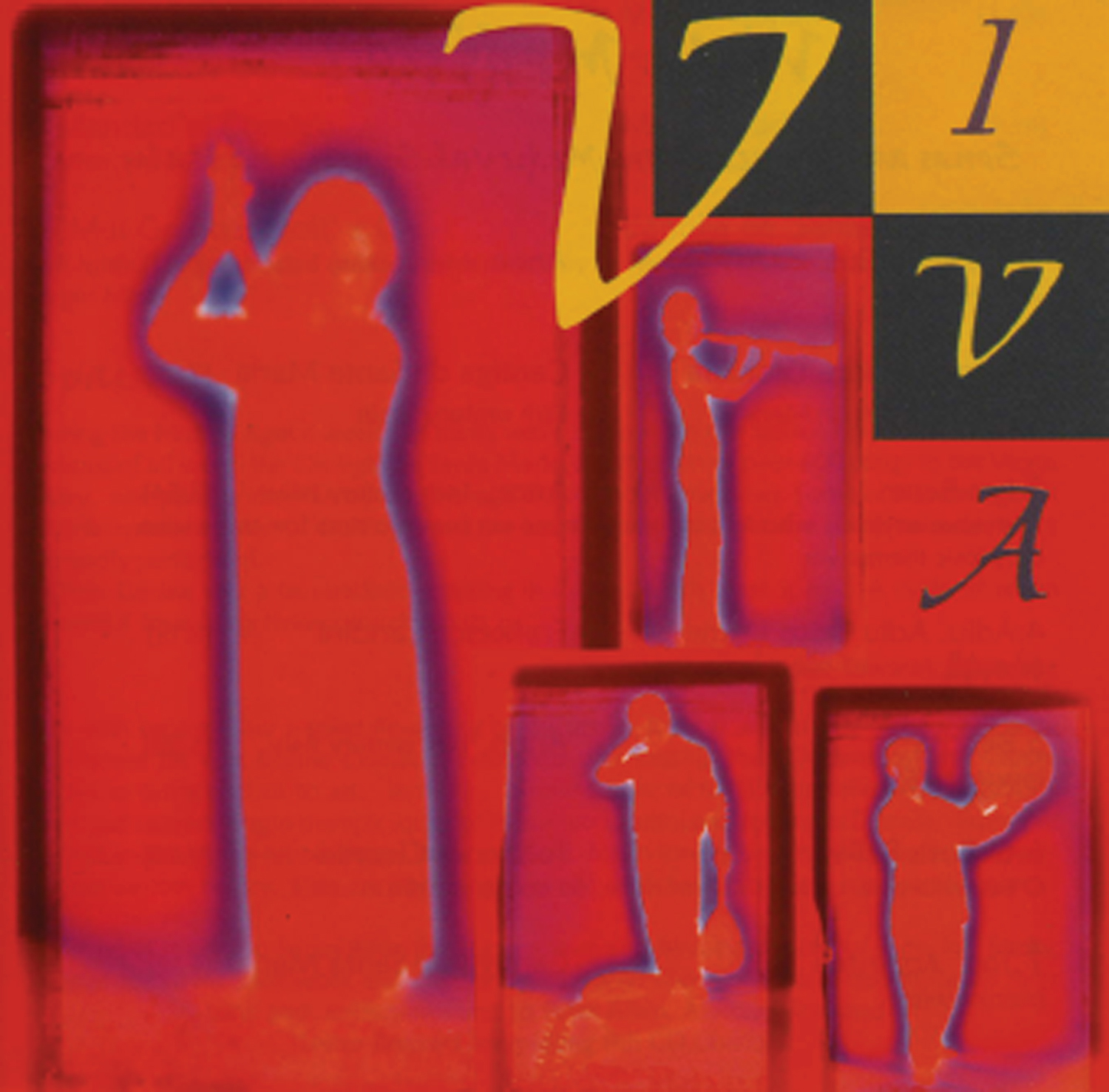
 Mediva : Viva Mediva.
Medieval music made enticingly modern.
Mediva burst upon the early music scene in 1998 with an hit concert at the Royal Academy of Music, and their concerts have been sell-out events ever since. Made up of an eclectic mix of ten musicians, this group makes medieval music sound startlingly modern through fresh arrangements, high-level sound design, and world-class performances by singers and multi-instrumentalists from throughout Europe. On this album, the highly sophisticated polyphonics of 14th century Italy intermingle beautifully with Spanish cantigas composed for the Virgin Mary, and the overall effect is surprisingly dramatic and exciting. Features a range of exotic medieval and Arabian instruments such as oud, saz, shawms, recorders, harp, psaltery, fiddle, and percussion, as well as a range of singing techniques to suit each repertoire. Standout tracks include "Ivo bene," "Mandad ei Comigo,' and "Adiu Adiu Dous Dame" in which the performer's voice magically transforms into a woodwind at certain points throughout the song.
Songs:
1. Amor mi fa Cantar (Anon C14th Italy)
2. Virgen Madre Gloriosa (Cantiga no 340)
3. Ivo bene (Anon C14th Italy)
4. Adiu Adiu Dous Dame (Landini)
5. Belicha (Anon C14th Italy)
6. O Roso Bella (Ciconia)
7. Tod Aqueste (Codax)
8. Ondas da Mar (Codax)
9. Mandad ei Comigo (Cantiga no 3)
10. Mui Grandes Noit e Dia (Cantiga no 57)
Listen to: the entire album.
License Medieval music made enticingly modern by Mediva for your project.
Play the music of Mediva in your restaurant or store.
Release date: 3/29/2007
Mediva lives in Cheshunt England
Tagged as: Classical, Medieval, Classical Singing, Medieval Romance, Lute, Pipes
Recommended albums:- Goodnight, Daylight by Park St Trio: Catchy, melodic jazz for all occasions
- Promenade en Europe Luth Baroque by Mauricio Buraglia: a marvelous classical spiral of lute sounds
- Rondeau Melancolique by Alex McCartney: Reflective, historically-informed performance on the lute
- Sailing by the Stars by Federico Moscogiuri: Original and evocative lute music
- JS Bach Trios on Guitar by Daniel Estrem: colorful classical guitar
- Cimarosa on Guitar by Daniel Estrem: colorful classical guitar
- Broadwood Grand Pianoforte 1809 by Susan Adams: Marvelously played classical piano pieces
- Stolen Jewels by Ensemble Vermillian: Richly textured 17th and 18th century cello and recorder
- Shop Sessions by The Dimples: Relaxing music for the heart and soul
- South by Southwest Compilation by Magnatune Compilation: the best music from Magnatune
- Apple Howling by Mundi: Early music meets global folk at the Penguin Café
- In the Moon of Wintertime by Aryeh Frankfurter: Timeless and enchanting folk music for the soul
- Angelorum - The Harps in the Trees by Cheryl Ann Fulton: World-class performer and teacher of Medieval, Baroque, Welsh triple, Celtic and Concert harps.
- Ancient Mosaic with Guitar by La Reverie: Recreating traditional music from a modern perspective
- Designer Bliss by Suchita Parte: ancient Indian songs in a modern blend
- Louis Couperin Harpsichord Music by Colin Booth: solo harpsichord music
- Collectors of Souls by Chiwawa: He who sings thinks no evil
- Les Baricades Misterieuses by Hanneke van Proosdij: vibrant harpsichord-music
- Musical Incense - volume two (Hang and Guitar Duets) by Laura Inserra: the Hang, a new instrument from Switzerland
- In Their Footsteps by Aryeh Frankfurter: Timeless and enchanting folk music for the soul
Downloads:
- MP3: High quality MP3 variable-bit-rate files. Most people download these: they are audiophile files that play everywhere.
- ALAC: Perfect quality Apple Lossless format files. If you use iTunes or an iPod, get these. They're an exact audio copy of the original CD, and include the CD artwork and artist info. This is the same format as High Definition audio provided by the iTunes store.
- AAC: High quality Apple Audio Codec files. If you use iTunes or an iPod, these files sound great and include CD art and artist info. This is the standard format provided by the iTunes music store.
- WAV: Perfect quality WAV files. This format works everywhere, and is an exact audio copy of the original CD. It sounds fantastic. Album art and artist info is unfortunately not possible with this format.
- FLAC Perfect quality open source FLAC files. This is an open source audio format. It is an exact copy of the original CD, and includes CD artwork and artist info. Works great on Linux, VLC and many audio players based on open source.
- OGG: High quality open source OGG files. This is an open source audio format. It is a compressed (smaller file size) version of the original CD, and includes CD artwork and artist info. Works great on Linux, VLC and many audio players based on open source.
- 128k: Medium quality 128K MP3 files. These are medium audio quality MP3 files that will work on every device. The audio quality is good enough for most uses. These files are intended for cases where you want to conserve disk space.
|
|
|

![[Magnatune : we are not evil]](http://he3.magnatune.com/images/m3/inside_magnatune_logo.gif)
![[Free trial: only $15 per month]](http://he3.magnatune.com/images/m3/inside_mascot.gif)
![[login]](http://he3.magnatune.com/images/m3/login_btn.gif)
![[info]](http://he3.magnatune.com/images/m3/info_btn.gif)