|
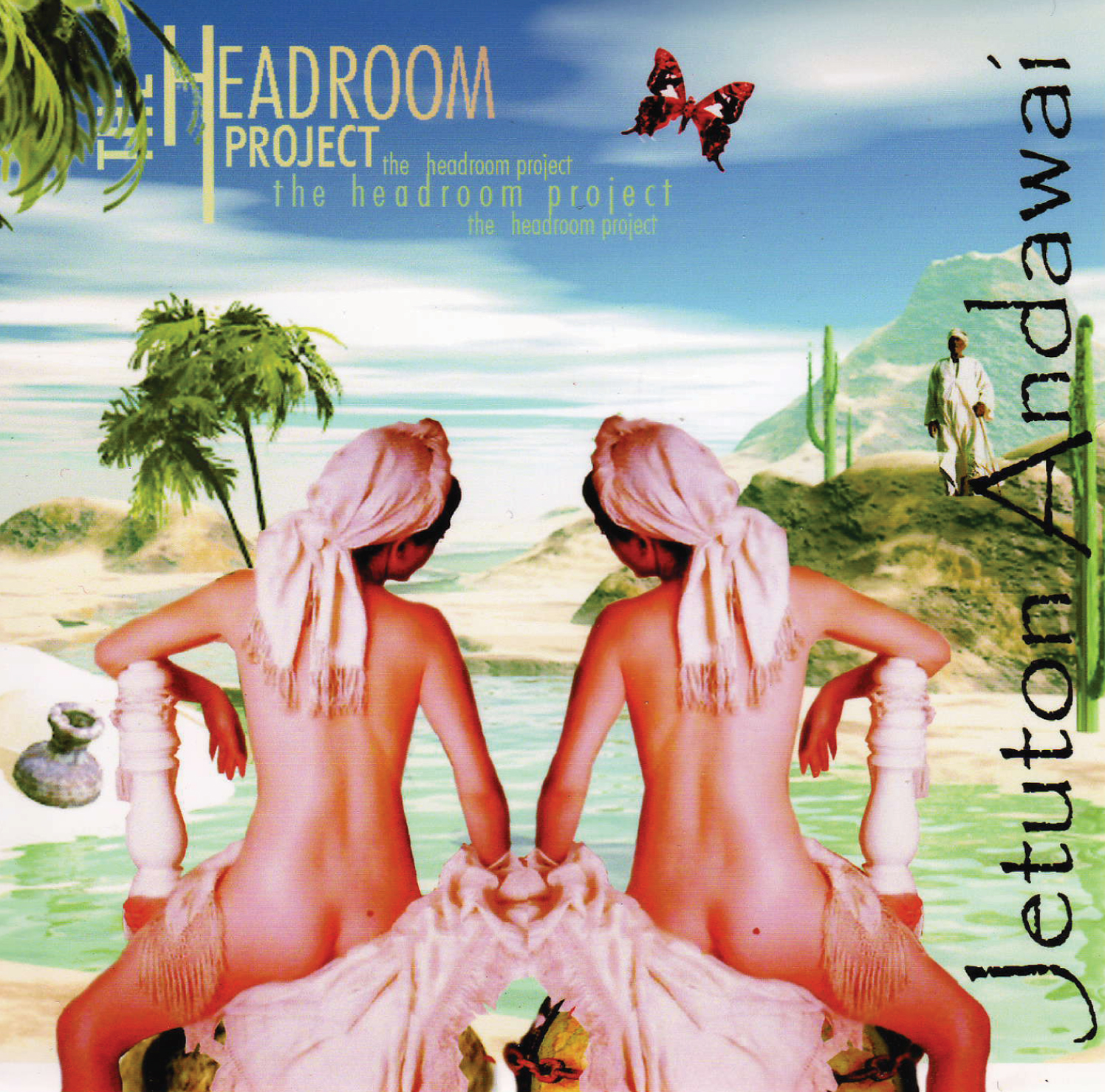
 The Headroom Project : Jetuton Andawai.
Vivid world-electronica grooves.
Combining amazing sound design with music from Africa, the Middle East, and Asia, Jetuton Andawai is one of the most vibrant albums we've heard this year. With dazzling vocals, fantastic bass work, and studio voodoo that's just completely off the hook, it doesn't sound like anything else out there. "Linda Morena" is the graceful, near-a cappella intro, and things proceed to get more and more interesting after that. "Jetuton Andawai" sounds like a Bollywood record being played backwards to Peter Gabriel, and "Lost World" is even more trippy, with tumbling, echoey loops and driving bass. "Manu Yu" has a mellow yet infectious groove, and the excellent "Copeuse Concon" combines future-classical Indian vocals with smoky jazz. None of the influences here seem like they should work together (islandy xylophones in a blues track?), but they not only succeed, they succeed wildly for a potent, totally unique sound. "Yesterday" is the most radio friendly track on the album, with pretty vocals by Sigrid Havercamp. But in true Headroom fashion, most of the vocals of Jetuton Andawai are shaped and manipulated to the point where they form new, never before heard languages. It's world pop for the global village.
Songs:
1. Linda Morena
2. Hejm
3. Jetuton Andawai
4. Industrial Blues
5. Yesterday
6. Manu Yu
7. Masem Tailor
8. Copeuse Concon
9. Anu de Dilaho
10. Late Night Blues
11. In Gaway
12. Lost World
13. Rainmaker
14. Jardin Oublie
Listen to: the entire album.
License Vivid world-electronica grooves by The Headroom Project for your project.
Play the music of The Headroom Project in your restaurant or store.
Release date: 5/15/2007
The Headroom Project lives in Bonn Germany
Tagged as: Electronica, World, World Influenced, Experimental Electronic, World Electronic
Recommended albums:- Nectar by Kitka: Eastern European women's vocal music
- Conversations Galantes by Ensemble Mirable: rare and extraordinary music of the Baroque
- Acoustic Dreams by Manuel Ochoa: jazz and tango from where else, Argentina
- Music from Braid by Sieber, Kammen and Fulton: dreamy music from the acclaimed video game Braid
- Bach Cello Suites on 8 String Guitar by Daniel Estrem: colorful classical guitar
- Lavender by Middle-Earth Ensemble: sultry and percussive Mid-East fusion
- Submission by Jay Kishor: Music without preservatives
- Just You and Me by Suchitra Lata: Swirling Chillout, Ambient, World, Progressive Pop, Indian classical veena and much more in between
- Lava Lounge by Suchitra Lata: Swirling Chillout, Ambient, World, Progressive Pop, Indian classical veena and much more in between
- Christmas Guitar by Jeff Wahl: acoustic new age and jazz guitar.
- Tantrabeats 2 - The Space of the Soul by Angelight: New Age/World Music for mankind from Russia
- Angelorum - The Harps in the Trees by Cheryl Ann Fulton: World-class performer and teacher of Medieval, Baroque, Welsh triple, Celtic and Concert harps.
- Goodnight, Daylight by Park St Trio: Catchy, melodic jazz for all occasions
- Tango - Jazz (live in Studio C) by Scott Hallgren: jazz, tango & other adventures
- Mozart 4 Quartets for Strings and Winds by American Baroque: Spectacular Baroque and Classical chamber music
- Electronica by Magnatune Compilation: the best music from Magnatune
- World Fusion by Magnatune Compilation: the best music from Magnatune
- CD1 - Bach - The Six Sonatas and Partitas for Solo Violin by Lara St John: Bach violin concertos
- Magnificent Obsession vol 7 - Beethoven Sonatas by Sebastian Forster: exquisitely performed Beethoven piano sonatas
- Harper's Brew by Aryeh Frankfurter: Timeless and enchanting folk music for the soul
Downloads:
- MP3: High quality MP3 variable-bit-rate files. Most people download these: they are audiophile files that play everywhere.
- ALAC: Perfect quality Apple Lossless format files. If you use iTunes or an iPod, get these. They're an exact audio copy of the original CD, and include the CD artwork and artist info. This is the same format as High Definition audio provided by the iTunes store.
- AAC: High quality Apple Audio Codec files. If you use iTunes or an iPod, these files sound great and include CD art and artist info. This is the standard format provided by the iTunes music store.
- WAV: Perfect quality WAV files. This format works everywhere, and is an exact audio copy of the original CD. It sounds fantastic. Album art and artist info is unfortunately not possible with this format.
- FLAC Perfect quality open source FLAC files. This is an open source audio format. It is an exact copy of the original CD, and includes CD artwork and artist info. Works great on Linux, VLC and many audio players based on open source.
- OGG: High quality open source OGG files. This is an open source audio format. It is a compressed (smaller file size) version of the original CD, and includes CD artwork and artist info. Works great on Linux, VLC and many audio players based on open source.
- 128k: Medium quality 128K MP3 files. These are medium audio quality MP3 files that will work on every device. The audio quality is good enough for most uses. These files are intended for cases where you want to conserve disk space.
|
|
|

![[Magnatune : we are not evil]](http://he3.magnatune.com/images/m3/inside_magnatune_logo.gif)
![[Free trial: only $15 per month]](http://he3.magnatune.com/images/m3/inside_mascot.gif)
![[login]](http://he3.magnatune.com/images/m3/login_btn.gif)
![[info]](http://he3.magnatune.com/images/m3/info_btn.gif)